Cooking for One: Small-Batch Dinners Worth Making
Solo cooking has a design problem. Most recipes are written for families — four to six servings — so the person cooking alone ends up with two bad options: eat the same dinner five nights in a row, or scale down and waste the odd half-onion. There's a third way, and it starts with shopping differently.
The math that ruins solo cooking
Halving a family recipe sounds trivial until you're dividing one egg. The recipes that suit one person were designed that way from the start — single-portion ingredients, one pan, no “serves 6” arithmetic. Cooking for one is a genre, not a downscaled version of another one.
Shop for meals, not for the week
Solo cooks waste less with smaller, more frequent shops: buy what three dinners need, not what a bulk deal suggests. Keep a small bench of keepers — eggs, a can of chickpeas, one lemon, something green — and you're never more than ten minutes from dinner.
Plate like a restaurant, not like a cafeteria
The sad-desk-meal problem is usually a composition problem. One composed plate — a protein, a plant, a sauce that makes the two get along — feels like a meal in a way that a random bowl of stuff never does. The chickpea salad on this site is the pattern done right: fifteen minutes, one bowl, actually appetizing.
The two-portion sweet spot
When you do want to batch, cook two — tonight's dinner and tomorrow's lunch, deliberately different. Two portions is the difference between leftovers as a plan and leftovers as a punishment.
Ask for recipes sized to you
This is where an ingredient-first generator shines: it doesn't assume a household. Request one serving and it writes the recipe around it — the nutrition card reflects your plate, not a family's divided by four.
Cooking for one is worth doing well — small shops, composed plates, recipes built for your actual appetite. It's the cheapest luxury there is.
Try these recipes
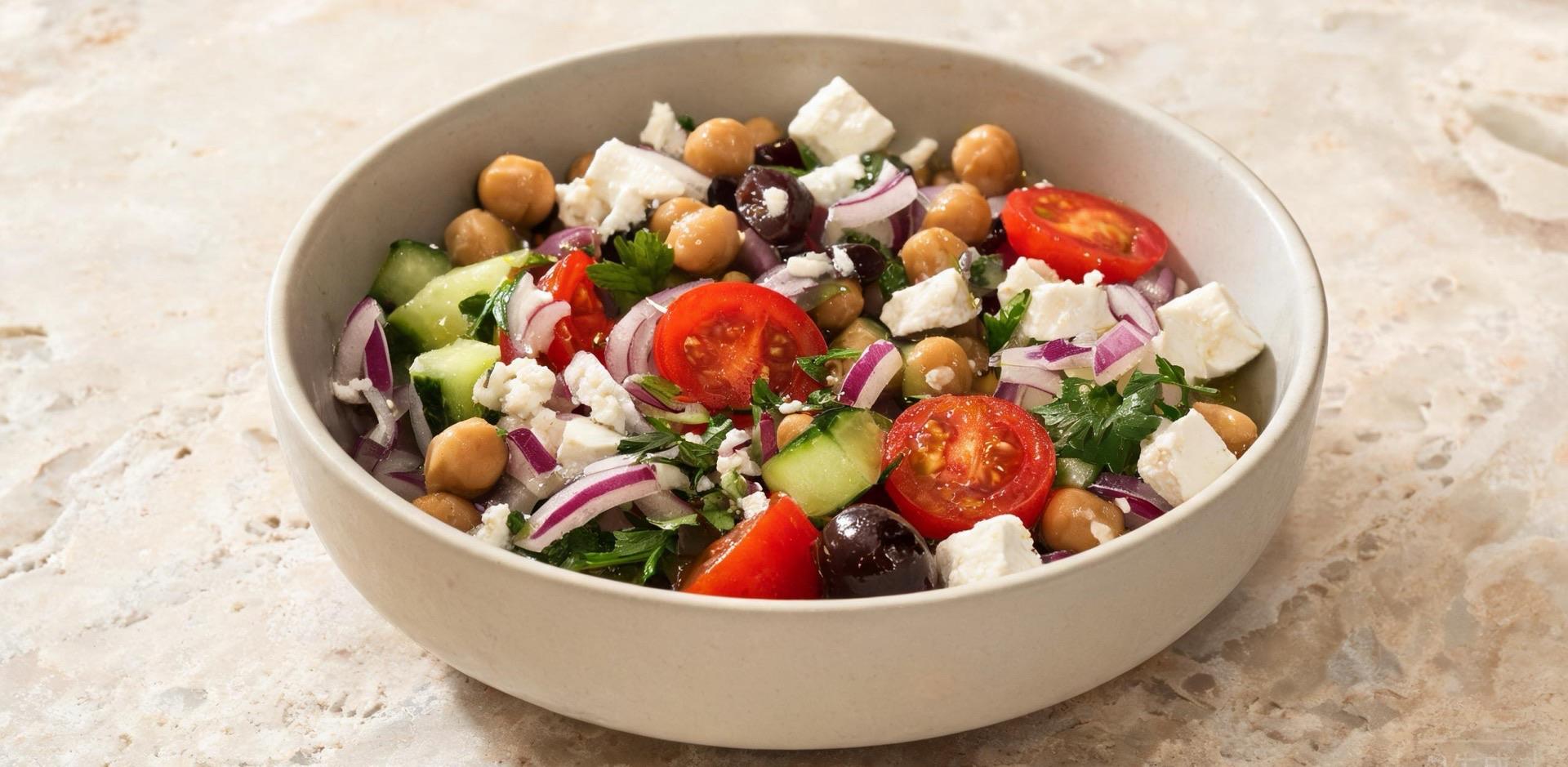
Mediterranean Chickpea & Avocado Salad
Crisp Persian cucumber, heirloom grape tomatoes, whipped tahini vinaigrette, and fresh spearmint ribbons.
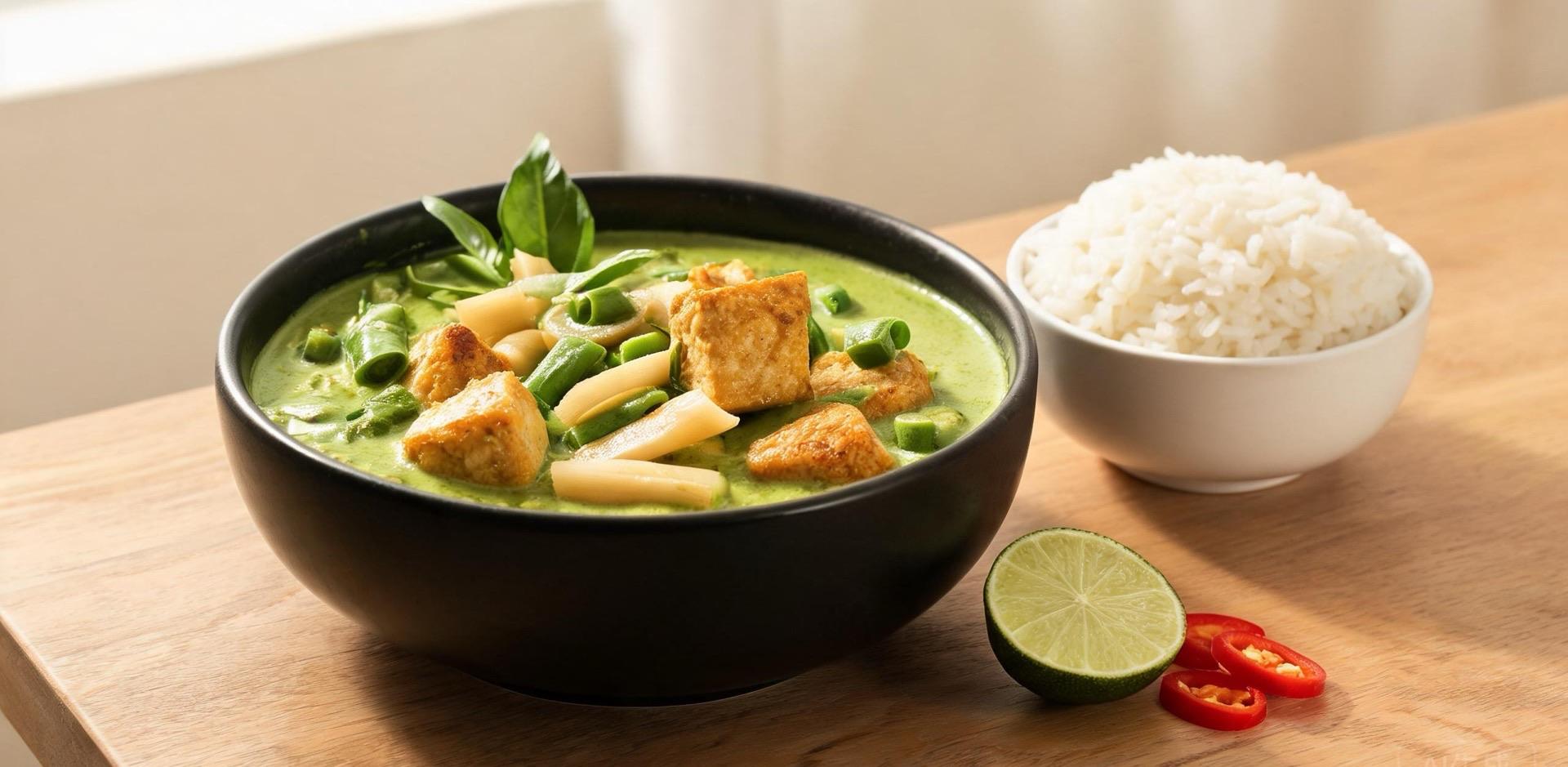
Thai Green Coconut Curry with Crisp Tofu
Aromatic kaffir lime and lemongrass infused coconut broth loaded with organic crisp tofu and snap peas.